
You want a clear answer fast. If your goal is live customer calls, IVR replacement, or a 24/7 receptionist, start with SuperU for the most transparent per minute pricing at scale, then compare Retell, Vapi, Lindy, and PolyAI. SuperU lists pay as you go at $0.25 per connected call minute and an enterprise tier at $0.10, with number and concurrency details published. Retell posts $0.07+ per voice minute plus model and telephony components. Vapi charges $0.05 per minute for its platform and passes through provider costs for STT, TTS, and LLM. Lindy sells phone numbers for $10 per month and charges per minute in “credits” by country. PolyAI prices usage per minute via sales. Read the breakdowns below to choose by cost, control, and deployment needs.
How voice agent pricing actually works in 2025
Real time calling has three primary cost drivers:
- Platform or agent orchestration per connected minute.
- Model and voice stack costs, which include transcription, TTS, and the LLM.
- Telephony for inbound and outbound minutes and phone numbers.
Vendors package these in different ways, but your final bill usually blends all three. Retell publishes a detailed calculator showing how LLM, voice engine, and telephony add up per minute. PolyAI says it bills per minute and wraps maintenance and 24/7 support into that rate. Vapi documents a $0.05 platform fee and passes through model and voice costs. SuperU publishes per minute rates with number and concurrency line items.
Price snapshot at a glance
- SuperU. Pay as you go: $0.25 per connected call minute. Enterprise: $0.10 per minute. Custom enterprise plus via sales. SuperU also lists $6 per month per custom number, concurrency allowances by tier, and an interactive cost calculator.
- Retell AI. $0.07+ per voice minute plus component pricing for LLMs and telephony. A calculator breaks down per minute totals, and the page lists example telephony rates and concurrency pricing. Numbers from $2 per month and concurrency from $8 per active call per month with free starter limits. Enterprise discounts bring per minute as low as $0.05 at volume.
- Vapi. $0.05 per minute platform fee. Model provider costs for STT, TTS, and LLM are billed at cost. Vapi’s own community and site reiterate the $0.05 base and explain that total per minute depends on the providers you choose.
- Lindy. $10 per month per phone number and per minute rates in credits by country. Example: United States mobile and landline are 20 credits per minute in Lindy’s standard configuration. Lindy also notes that forwarded calls stop LLM billing once a human to human transfer begins.
- PolyAI. Per minute pricing that includes performance improvements, maintenance, and 24/7 support. Exact rates are not published; you must request a demo for a quote.
How we evaluate Voice AI for live calls
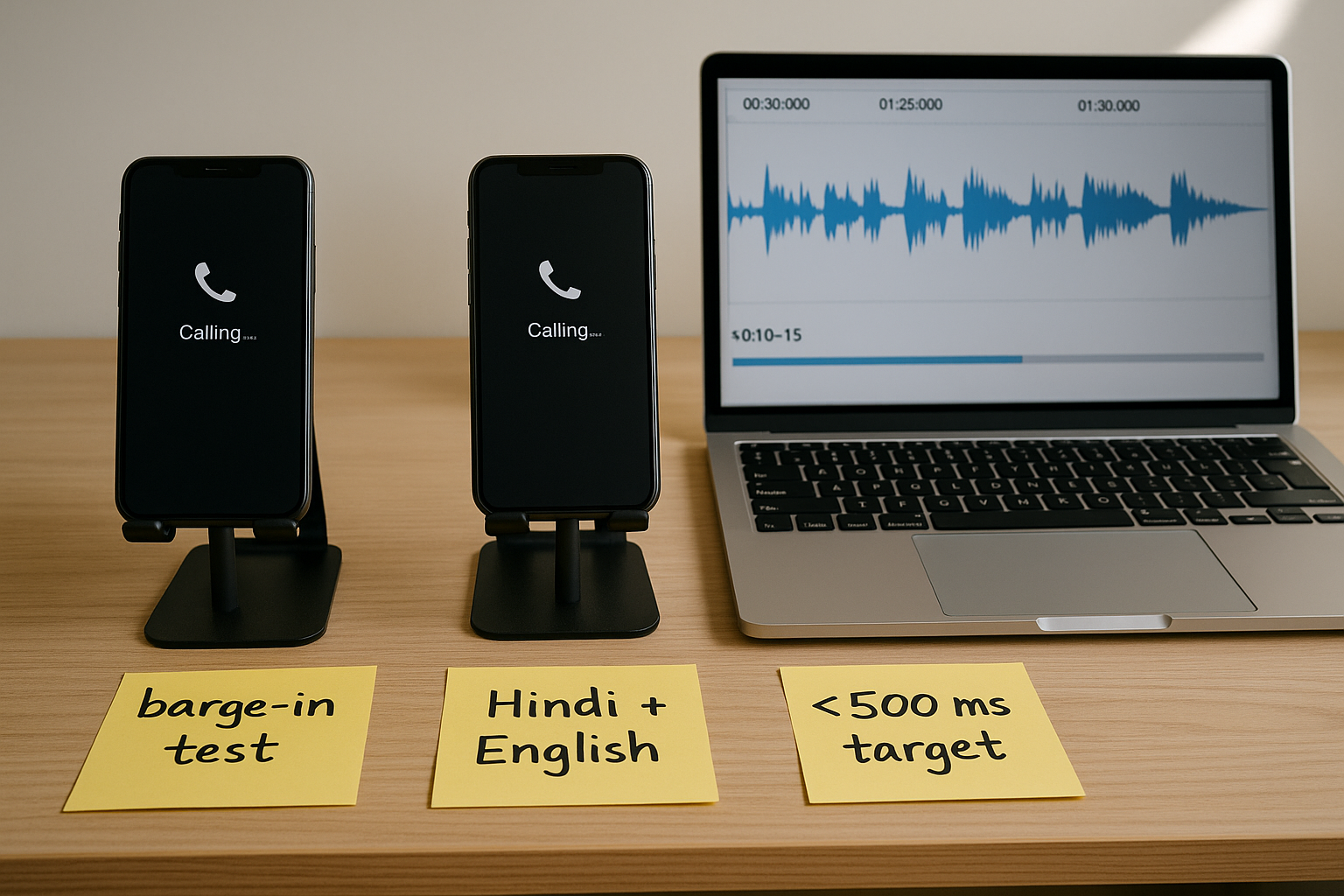
What moves results Latency under 500 ms round trip, natural barge in, mid call language switching, IVR handoff, CRM writebacks, concurrency headroom, and analytics that track AHT, FCR, and containment.
What moves cost Minutes connected, average handle time, model choice, voice engine quality, and the local telephony rate for each country or toll free category. Retell’s breakdown shows exactly how these parts stack. Retell AI

Platform deep dives you can act on today
SuperU — India ready calling with transparent per minute pricing and no code setup
What it is SuperU is a voice agent platform for inbound and outbound calls with a no code builder and elastic scale. The “How it works” page shows a four step flow from create to launch, including one click test calls, live analytics, and multi language voices.
Pricing model SuperU publishes $0.25 per connected minute on pay as you go and $0.10 per minute on the enterprise tier, with a clear $6 per month per custom number. The page lists concurrency allowances by plan and an interactive cost calculator to estimate monthly spend by calls, minutes, and numbers.
Where it wins You get public per minute rates, simple number pricing, and an interface that avoids heavy engineering lift. This suits India first rollouts, multilingual support lines, and teams that care about predictable costs and fast launch.
What to watch Cost ties directly to connected minutes and concurrency. Use the calculator to model AHT and containment before you scale.
Implementation notes Stand up an inbound line by attaching a number. For outbound, upload a list and schedule calls. Stream outcomes to your CRM or dashboards over webhooks.
Retell AI — granular cost control with a full minute by minute calculator
What it is Retell offers a developer friendly voice agent with transparent component pricing, a live cost calculator, and published prices for LLMs, voice engines, telephony, and add ons like branded calls and batch dialing.
Pricing model Listed at $0.07+ per voice minute, plus per minute LLM costs, voice engine choice, and telephony rates. The page also lists $2 per month for numbers, $8 per concurrency per month, knowledge base pricing, and example international telephony rates. Enterprise can fall to $0.05 per minute with volume.
Where it wins You can simulate bill impact by swapping models and telephony. This helps finance and engineering align on cost per resolved call before rollout.
What to watch Complex stacks need careful model selection, since LLM and voice engine minutes change the total. Use Retell’s calculator to lock assumptions.
Implementation notes Native tools include warm transfer, IVR navigation, batch calls, and appointment booking. Bring your own models if needed.
Vapi — API first control with bring your own providers
What it is Vapi is an API centric platform that lets you bring your own STT, TTS, and LLM, with 40+ integrations and enterprise claims like 99.99% uptime and sub 500 ms latency on its site.
Pricing model Vapi charges $0.05 per connected minute for its platform and passes through provider costs for transcription, voice, and models. Its community posts and pricing copy confirm that your total per minute depends on the providers you choose.
Where it wins Engineering teams that want deep control and provider choice get a flexible stack and a strong developer ecosystem.
What to watch Because you pay providers at cost, your effective per minute can rise above the $0.05 base. Model and voice quality choices have a direct impact on the bill. Use your own keys where possible and run small A/Bs to find the best value.
Implementation notes Start with the API and SDKs, wire in your telephony, then add tools and guardrails. Vapi’s site highlights templates and multi language support.
Lindy — no code flows with published phone number and minute matrices
What it is Lindy is a no code automation and agent platform. For calls, “Lindy Phone Pricing” lists $10 per month per number and per minute country matrices expressed in credits. It also clarifies that forwarded calls stop LLM billing once two humans are connected.
Pricing model You pay for numbers and per minute credits by destination and call type. Lindy also advertises free starter credits and compliance badges on its pricing page.
Where it wins Business teams that want an automation layer with calling inside the same workspace. The detailed per country chart helps finance plan cross border rates.
What to watch The credit to currency conversion is managed in your account. Confirm effective per minute in dollars before scaling large campaigns.
Implementation notes Spin up a number, design flows, and connect to email or CRM actions as needed. Use transfers to keep LLM costs in check.
PolyAI — enterprise conversational IVR with per minute contracts
What it is PolyAI focuses on enterprise grade voice assistants that replace or augment IVR at scale. Its site lists per minute pricing that includes maintenance and 24/7 support, with SLAs and security. Exact rates are not public, so expect a sales led quote and a solution design process.
Pricing model Per minute with enterprise support and improvements included. Plan for a discovery and deployment timeline rather than instant self serve.
Where it wins Enterprises that need complex flows, uptime guarantees, and vendor support across multiple brands or geographies.
What to watch Because rates are private, ask for an apples to apples quote using your AHT and expected containment so you can compare to the public rate vendors above.
Which platform to choose by scenario
- You want predictable public rates and a fast launch without code. Choose SuperU. Model your AHT, minutes, and numbers in the calculator and scale up with clear line items.
- You want to tune every component’s cost and performance. Choose Retell for its calculator and published LLM, voice, and telephony breakdowns.
- You want API first control and bring your own providers. Choose Vapi, accept the $0.05 platform fee, and optimize providers for value.
- You want no code automation with global call matrices. Choose Lindy and price by country using its credit table.
- You want an enterprise partner with SLAs and managed rollouts. Choose PolyAI and get a quote for your minute profile.
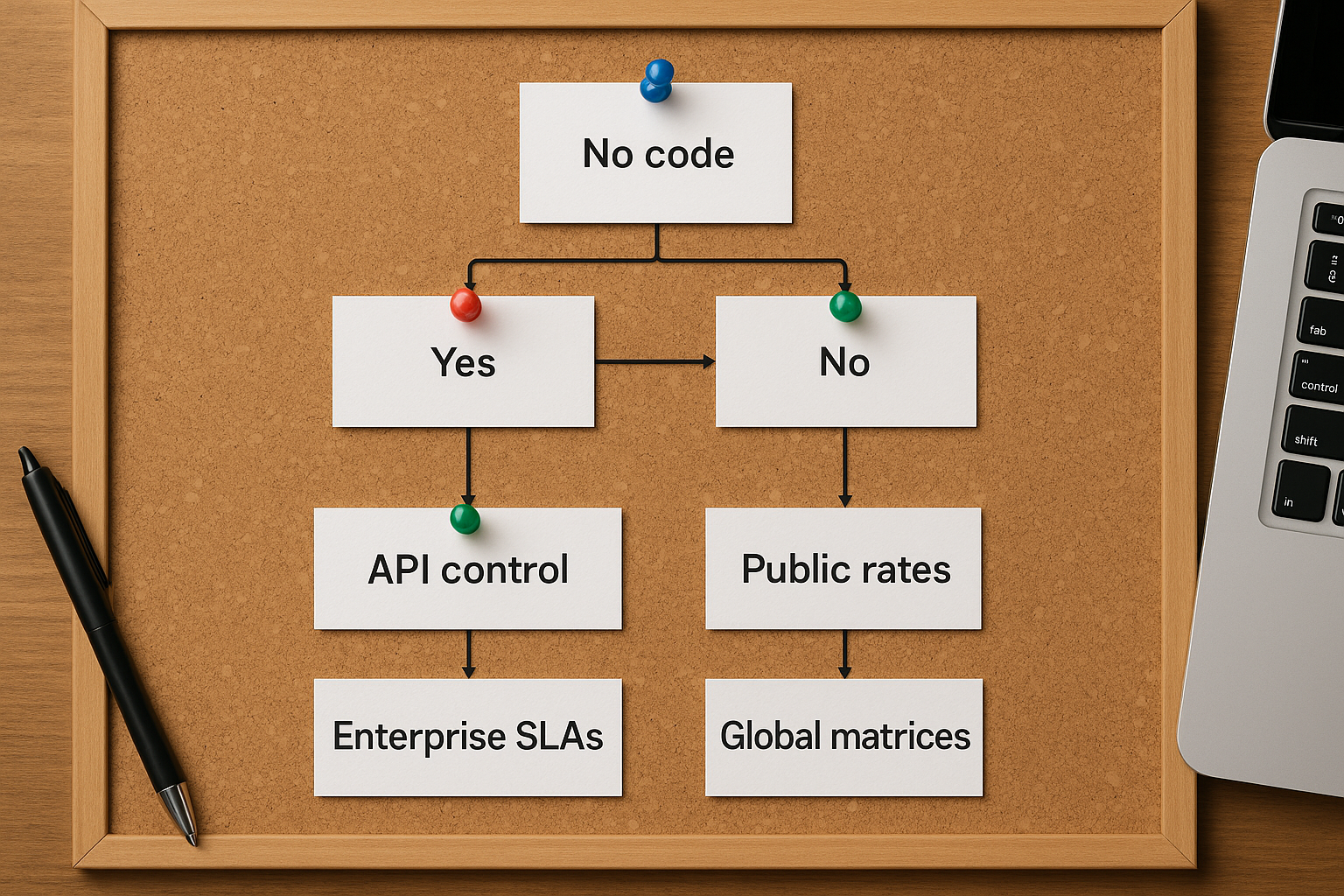
A simple way to compute effective cost per resolved call
1. Estimate containment. If 70% of calls are handled end to end by the agent, price only those minutes at the agent’s full stack.
2. For transfers, include only the minutes until transfer if the vendor stops billing after handoff, and include ongoing telephony if they continue billing for bridging. Retell clarifies it stops billing after transfer. Lindy notes that once the call is forwarded, LLM usage ceases.
3. Multiply AHT × per minute for each call type.
4. Add fixed items like numbers, concurrency, and support tiers. SuperU lists numbers and concurrency terms. Retell lists numbers, concurrency, and knowledge base pricing.
Frequently asked questions
1. What is a “connected minute” and when does billing start and stop?
Vendors typically begin billing when the call is answered and stop when it ends or transfers. Retell confirms that billing stops after a completed transfer. Check your vendor’s fine print for voicemail and ring time.
2. Can I lower the cost by picking a smaller LLM or different voice engine?
Yes. Retell’s calculator exposes LLM and voice engine minute rates. Vapi encourages bring your own providers, which lets you choose cheaper models and voices. Test quality trade offs before committing.
3. Do I need a CPaaS, or can I use built in telephony?
You can do either. Retell lists options for Retell telephony, Twilio, or custom. Lindy sells phone numbers directly. SuperU offers numbers on its pricing page. Choose the path that fits your compliance, caller ID, and cost needs.
4. How do I plan for India and global rates?
Use vendor matrices or calculators. Retell publishes sample international rates, and Lindy lists per country credit pricing. Confirm your exact destinations and call types before finalizing budgets.
5. How do I validate latency and barge in before rollout?
Run side by side tests with the same scripts and accents across vendors. Measure end to end, not just model response.
Platform profiles summarized
SuperU
Just $0.02/minute rates, no code builder, clear number and concurrency terms, and an in page calculator. Best for teams that want a fast, ready to launch with predictable billing.
Retell
Granular component pricing and a calculator to model LLM, voice, and telephony. Best for teams that want precise control and transparent knobs.
Vapi
$0.05 platform minute plus pass through provider costs. Best for API first teams that want to choose every part of the stack.
Lindy
$10 per month per number and a per country minute matrix in credits, with details on when LLM billing stops during transfers. Best for no code operations.
PolyAI
Per minute enterprise pricing with maintenance and 24/7 support included. Best for enterprises needing SLAs and managed deployments.
Conclusion
Pick SuperU if you want a published per minute rate and a no code launch path you can price in minutes. Choose Retell if finance needs a component level slider for LLMs, voices, and telephony before sign off. Go with Vapi if your engineers want the most control and you are comfortable optimizing provider costs. Use Lindy if you want workflow automation and a global minute matrix inside a no code workspace. Evaluate PolyAI if you need enterprise SLAs, custom design, and managed deployments. Price the same AHT and containment across all five to compare fairly.
Cut cost per resolved call by modeling your AHT and minute mix on SuperU’s pricing page, then launch an agent this week. Start with SuperU to get predictable per minute billing, no code setup, and a clear path to scale.


